At mile 21 of the Berlin Marathon, Brian Salzer checked his watch, looked at his pace and smiled. He was having an awesome time.
Then his heart stopped.
Salzer collapsed face-first onto the course. He had no pulse and no breathing, and he couldn’t break his fall. A doctor who was running behind him saw him go down and stopped her own race to help him.
“This guy’s in a lot of trouble,” she had thought.
She performed CPR for five minutes until an ambulance arrived. It took two shocks from a defibrillator to restart his heart. When the second shock hit, Salzer grabbed the doctor’s hands.
“Stop it! What are you doing?” he said. He had no idea what had just happened to him.
When Salzer realized something was wrong, he said he was confused.
“You’re not going to let me finish this race, are you?”
It was Salzer’s 24th marathon. He had started running when he was 40, and had been running for more than a decade with no problems.
At the hospital, doctors found that three of his coronary arteries had been abnormally narrow since birth. He needed surgery to insert three stents to fix them.
“Apparently they were fine for 23 marathons,” Salzer said, “but not 24.”
But Salzer still runs. He did a 5K race in early April and the 8K Crazy Legs Classic at the end of the month.
“I still like running,” he said.
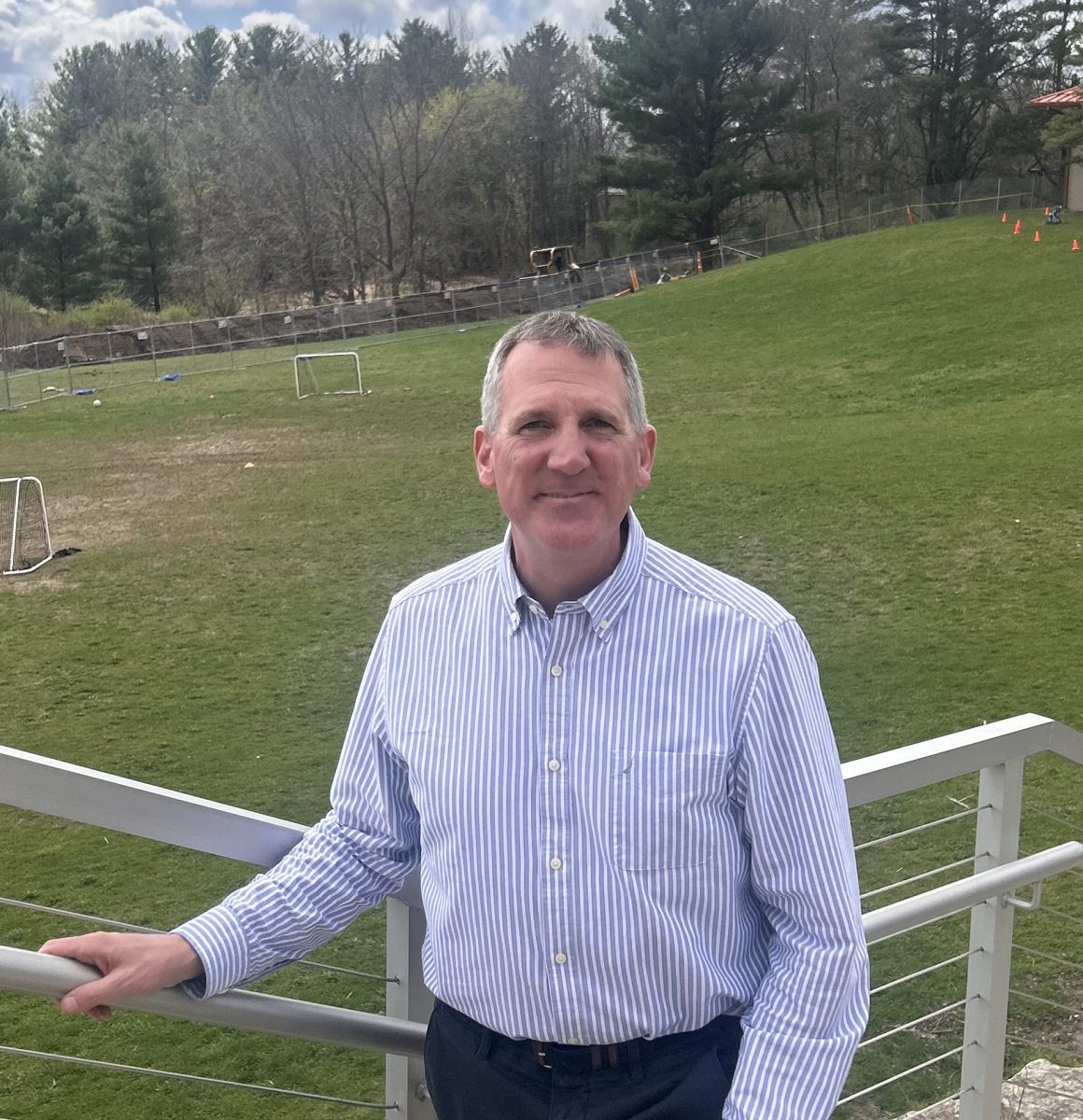
Now as Head of High School at Madison Country Day School, Salzer brings that same determination to his work with students every day.
His number one priority is “creating a safe, productive, and high-performance environment for students and staff.”
“We don’t just want successful students; we want thriving individuals,” he said.
This means that he has to balance data-driven decision making that’s designed from tracking student’s academic progress and outcomes with still maintaining a positive, inviting school culture.
Salzer’s day begins at 7:30 am when he arrives at school to scan emails and double check his calendar for the day.
At 7:45 he is at the front door to greet students and staff for the school day. “This is a non-negotiable part of my day; greeting students and staff by name sets a positive tone for the day,” Salzer said.
Observing the curriculum in living color is an important part of his job, and he enjoys spending as much time as he can in classrooms.
“I am a teacher at heart, so I like to find ways to get to know the students better beyond just being an administrator in an office,” Salzer said.
He also enjoys leading an elective and taking time to be directly interacting with students.
MCDS isn’t his first experience in International Baccalaureate schools. Salzer worked in international schools in Germany, most recently as head of an IB school near Frankfurt.
Student population and academic success is similar compared to MCDS and his previous school, but the biggest difference to him is the sports culture. In Germany, his schools didn’t have their own sports teams.
“Seeing the Prairie Hawk identity tied to our own gyms and fields creates a sense of community pride that is very special to MCDS,” Salzer said.
With each new school, he works to bring new ideas to help enrich the experience of students and teachers.
“I had been living in Germany for 10 years when this happened,” Salzer said. “It completely changed my life.”
His 23rd marathon shifted his perspective and made him want to move home to Wisconsin to spend more time with his family in his second chance at life. He knew that he only wanted one job, and that was at an IB school.
“I had to argue with the recruiters because they told me I was overqualified and I shouldn’t apply for this job [at MCDS],” Salzer laughed.
“I told them my whole story. I said, I have this new life. And in my new life, I want to be in Madison. I want to be with my family. And I don’t care what job I do.”
His biggest challenge in a day is the “predictable unpredictability” of his job, where once or twice a week something will demand his immediate attention and require resolution whether it’s been put in his schedule or not. These attention-demanding challenges create a ripple effect, causing his schedule to shift to accommodate these unpredictable events.
Despite this, Salzer enjoys the collaborative process of thinking through possible solutions and resolving whatever has occurred, which he believes is the most rewarding part of the job.
“High school students are unique and absolutely fun to work with,” Salzer said. “They share unique insights, find humor where we may not have noticed, and they question anything that does not make sense to them.”
He likes that high school students are in a stage of constant inquiry, wanting to hear other perspectives, understand the “why” behind things, and eager to try something new.
Salzer ends the school day helping direct traffic and keeping an eye out for the safety of everyone at dismissal before heading back to his office to close out projects and prepare for the next morning so he can start fresh the next day.
“I want people to know that I am an open-door leader,” Salzer said. “If you can think of something that can brighten the school experience, please talk with me and let’s make it happen!”